Do you own a unit/ apartment in a Strata Titled complex and ever wondered who is responsible for the Hot Water service?
The answer lies in whether or not the hot water supplied to your unit is from a “Common hot water service”. Hot water supplied to your unit may be supplied from a gas or electric Hot water service (HWS). Does this hot water service supply hot water to multiple units with-in your strata complex? Or does it supply water purely to your apartment?
If the hot water service is supplying hot water exclusively to your unit, then the costs to maintain, repair, service and replace this hot water service would be the responsibility of the unit Owner. A private hot water service which serves only one unit, may not necessarily be located in a private or subsidiary unit area, it could be located in a common area (perhaps a breezeway) or attached to a common external wall. The key element here is not the location, but who it exclusively serves.
If the hot water service is one which is supplying hot water to more than one unit then this hot water service would be a common hot water service. Just as other “common” items and areas are the responsibility of the Strata Corporation to collectively maintain, so too is the common hot water service the responsibility of the Strata Corporation.
STRATA TITLES ACT 1988
Part 2—Division of land by strata plan
Division 1—The strata plan
5—Nature of strata plan and requirements with which it must conform
(6) – The common property comprises—
(a) any land or space that is not within a unit;
(b) any pipe, cable, wire, duct or drain that is not for the exclusive use of a unit;
(c) any structure that is not for the exclusive use of a unit installed before the deposit of the strata plan;
(d) any structure installed by a strata corporation as part of the common property;
(e) any other structure on the site committed to the care of a strata corporation as part of the common property.
Is the Strata Hot Water Service covered by Strata Insurance?
The short answer is that the hot water service will be covered by the strata insurance as part of the Strata building insurance cover. This does not mean however that you have a claim with respect to your hot water service. The same as any building insurance claim, there must have been a claimable event for which you are seeking the insurer to assist you with. By this we mean; if the issue you have with your hot water service is one of general service, old age, general wear and tear, then there is no claim, and the same as any other maintenance item, the repairs (or replacement) required on the hot water service will remain the responsibility of the hot water service Owner.
If, however, the hot water service was stolen, or damaged in a building fire/ storm, then you may find that depending on the conditions and excesses applicable to your individual Strata building policy, that this could be a claimable matter, which could be lodged via your Strata Manager, insurance Broker or Presiding Officer (whichever is applicable to your Strata Corporation).
Alternatively, damages to the hot water service itself may not be a claim, however water damages caused as a result of an unexpected leak, may potentially form part of a claim. It is also possible in such instance, that the Strata Building Insurance may need to work side by side with an Owners contents Insurer.
Can I relocate my Hot water service?
The relocation of your individual hot water service would be at the cost of the unit owner whom owns and has exclusive use of the hot water service.
Relocating the Hot water service, may require the consent of the Strata Corporation Members depending on the resolutions previously passed by your Strata Corporation and the location that you wish to move it. For example, if you wish to relocate it to a common wall and/ or the group has not previously passed a blanket resolution in regards to where Members can relocate their HWS then this would require the consent of the Corporation by passing an appropriate resolution in accordance with the Strata Titles Act 1988.
This would be the same as say replacing and relocating an existing tank style Hot water services for perhaps a roof mounted solar hot water service.
Can I replace my Hot water service with a different sized/ shaped unit?
The replacement of your individual hot water service would as discussed above be at the cost of the unit owner whom owns and has exclusive use of the hot water service.
If you were replacing your Hot water service with the same style and shape unit (i.e an instantaneous for another instantaneous unit, or a water tank the same size, for another the same size) then this would not require the consent of the Strata Corporation. As this is effectively a maintenance item, where you are not changing the appearance or attachments to the building. If you are seeking to replace the Hot water service with a different style/ type, then you may require the consent of the Strata Corporation Members depending on the resolutions previously passed by your Strata Corporation and the changes being sought. For example, if you wish to replace your instantaneous unit to a large style water tank attached to the wall and such changes have not previously been passed a blanket resolution in regards to doing so, then this would require the consent of the Strata Corporation by passing an appropriate resolution in accordance with the Strata Titles Act 1988.
Every Strata Corporation (and Community Corporation) is different, made up of different people and different past precedents. It is in your best interest always before undertaking any works to the property (particularly external works), to initially reach out to your Presiding Officer or Strata Manager to discuss the works you are seeking and find out what action may or may not be required from you.
You may also find that similar works have been approved in the past and the Strata Corporation may have a Plumber or Contractor familiar with your site and the works required that can be asked to provide you with a quote.
Looking to change Managers? Stratarama is here to assist you every step of the way. Contact us by clicking on the link for an obligation-free proposal. Wanting to come on board? Our friendly team will arrange a smooth transfer from start to finish, assisting and guiding you on all the steps.
Strata Community Association (SCA) developed a Strata Management Practice Standard (SMPS), which Strata Management businesses who are SCA members are able to submit to in order to highlight their professional standing in the strata and community management industry.
A voluntary practice standard, the SMPS is for strata community management businesses, in relation to their own internal procedures as well as contractual relationships with strata communities.
Through an independent audited process, the SMPS recognises businesses that have developed and adhered to their documented internal processes. These are implemented to ensure best practice with regards to trying to improve client satisfaction and also to ensure proper internal business processes.
At the writing of this, only 15 Strata and Community Companies in Australia have committed to and subjected their business to the audit process and become Certified SMPS Strata management businesses.
Stratarama are very pleased to be a leader in this area, becoming the first (and to date, only) SMPS Certified Strata and Community Management Business servicing South Australian Strata and community titled properties.
We believe that along with maintaining our internal systems, processes and guides, by choosing to have these audited by third party auditors, as arranged by the Strata Community Association (SCA), we are able to provide confidence to our clients and those who may be seeking a change in management. Submitting to meet this certification highlights our commitment to be transparent and ethical in all our dealings both with our clients and also our team.
SMPS Certification we believe offers:
peace of mind for existing and prospective clients knowing the business’s policies, procedures and accounts are audited annually
a beneficial training tool for employees, providing employee certainty and promotes retention of our team
provides a point of difference
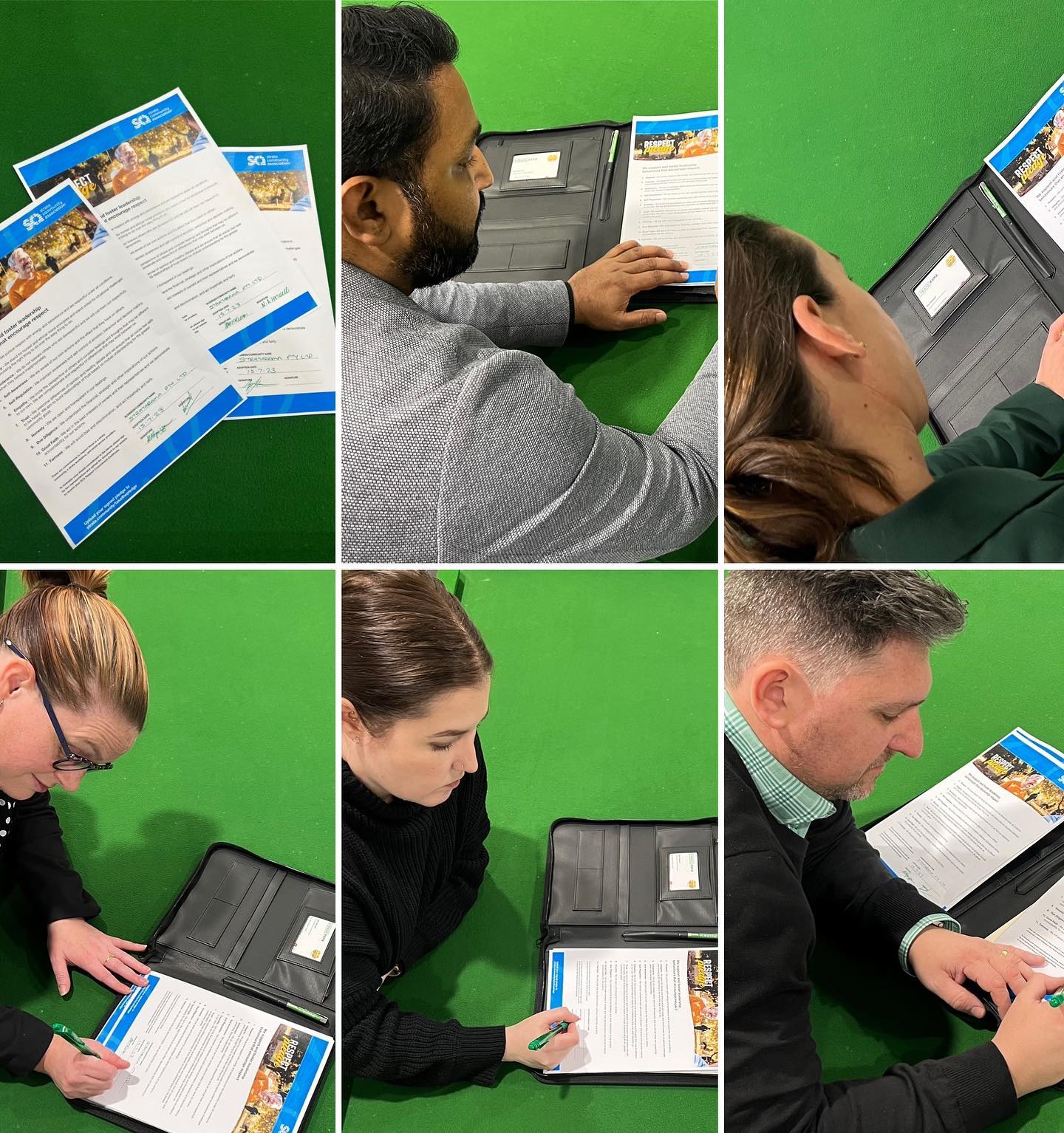
In 2023, Stratarama were also the first South Australian Business to take the Respect Pledge. The SMPS certification and the commitment to the SCA respect pledge are just some ways in which Stratarama aim to show our commitment to clients and delivering upon our standards.
That’s the only job batteries owe us: to provide modern humans with the convenience of electricity in a handy, portable form. The only problem is that most batteries run flat quickly, and you must discard them if you don’t have a specialized charger.
This culture leads to billions of disposable batteries being thrown away yearly. A habit that’s equally hard on your pocket and bad for our environment.
One common solution being taken up routinely is the use of rechargeable (Lithium) battery! A lithium battery is like a rechargeable water tank for your electronics. It holds a special type of liquid that stores lots of energy and releases it slowly to power your devices.
This liquid uses lithium metal, which makes these batteries so powerful and compact. They power everything from electric cars to computers, smartphones, and other gadgets. In particular you will see such batteries in items such as Portable Scooters. Unfortunately, this comes with significant risks, particular for Fire, especially if left on charge, or poor quality/ cheap batteries are being charged.
In recent times there has been many incidents of such batteries causing damage to people or property. In April 2024 an e-scooter battery fire erupted at the Oaks Embassy involving creating significant damage not just from the fire, but also the water from the sprinkler systems in the apartments. See the below links to the story:
While generally safe under normal use, lithium-ion batteries can overheat and ignite under certain conditions. These fires can be intense, releasing toxic fumes and seriously threatening your property and safety.
Several factors can contribute to the risk of a lithium battery fire; however, four instances are stated below.
Overheating or Extreme Temperatures
Exposure to direct sunlight, heat sources, or even storing them in a hot car can elevate temperatures dangerously, increasing the risk of fire.
Overcharging or Faulty Chargers
Using incompatible chargers or leaving batteries plugged in after they’re full can lead to overcharging, another significant fire hazard.
Physical Damage
Punctures, crushing, or bending of the battery can cause internal damage and trigger a fire [2, 3]. You want to avoid this scenario.
Manufacturing Defects
Faulty batteries can malfunction and overheat even under normal use. While not common, it is also an issue.
These risks above (i.e., mechanical, electrical, and thermal abuse) lead to what is known as a “Thermal Runaway.” The event occurs when a cell within the battery overheats, releasing energy that further heats surrounding cells.
The energy created leads to a dangerous chain reaction, i.e., several events triggered by the same initial event, escalating the fire’s intensity.
Safety Tips to Keep Lithium Battery Packs
Thankfully, here are a few actions you can practice to reduce the risk of having a lithium battery fire:
Use Approved Chargers Always use a certified replacement charger or the one supplied with your device.
Charge on Flat, Heat-Resistant Surfaces Avoid charging your devices on/near flammable surfaces (e.g., carpets, beds, cardboard, etc).
Don’t Leave Batteries Charging Unattended Avoid charging your devices overnight – if you can.
Store Batteries Properly Keep them in cool, dry locations away from heat sources and direct sunshine.
Invest in Safety Measures Install fire extinguishers and smoke detectors designed to put out lithium battery fires. They are crucial additions to your home safety plan.
Examine Batteries Regularly Inspect visually for damage, swelling, or leaks. If you observe these visual cues, dispose of damaged batteries appropriately (see below).
How you should Safely Dispose your Old Batteries
Lithium batteries should never be thrown in regular trash because incineration or improper disposal at landfills can damage them, increasing the fire risk [1]. Check with your local waste management authority for designated lithium battery recycling locations.
Note: even small batteries can cause significant damage.
Are these concerns real?
The concerns around these batteries is of such a concern that in 2023 the ACCC released a paper about it, which can be read here:
Researchers are constantly working on improving lithium battery safety.
This process includes developing more fire-resistant materials, improved battery safety circuits, and early warning systems to detect potential problems.
As our reliance on lithium batteries grows, so does the need for ongoing safety education and responsible practices.
By understanding the risks and taking necessary precautions, you can harness the power of lithium batteries without compromising your safety.
Insurances
It is important to note that even in the event that your property is adequately insured and has the correct levels of cover in place. No one wants the fall out from an insurance claim. Potentially higher excesses, high premiums as a result of the costs of the claim paid out resulting from fire and water damages (sprinklers/ Fire brigade). This talk about insurance doesn’t even take into consideration the real concerns which is of course the genuine risk of bodily harm or even loss of life that a fire can cause.
Two of the Insurers who regularly deal with Strata and Community Titled properties both in South Australia and Australia, CHU and SCI have both issued information about these batteries on their webpages. Both are referenced below for your reading:
Recently Tony Johnson of Stratarama was asked to attend and speak at a Finance Society’s First Home Buyers Seminar to provide information for those looking to purchase for the first time in a Strata or Community Titled property here in South Australia.
It doesn’t matter whether you are a First home buyer or anyone looking to purchase into a Community or Strata titled property in SA, its important to understand what you are purchasing and be aware in advance of placing an offer, that you are not entering into the purchase of a Torrens Titled property. The purchase you may be making comes with a variety of other rights and responsibilities. Any property purchased that has an element of common property should be reviewed.
To begin, with no matter which title you are purchasing, make sure you properly review and consider the documents compiled by the Conveyancers (and selling Agents) called the Form 1. This document contains not only all the standard documents for any other property purchase but it also contains a select set of documents relating to either Strata or Community Title, depending on the property. These are the Section 41 (Strata) or Section 139 (Community) Titled Documents.
Importantly here you will find information relevant to maintenance, insurances, costs and possibly any neighbouring unit disputes. Don’t just read the cover sheets for these searches, because an understanding of the funds held, allocation of the funds held, maintenance being considered and in fact any additional costs that the group may be considering imposing on all unit Owners sit with-in the last two sets of minutes from the body Corporate meetings held of the group and the bylaws/ Articles or Resolutions sheets provided. These searches will often also contain any major reports such as Engineering issues.
Depending on whether the property is a strata or community will impact whether you are responsible for different maintenance items personally, or collectively. Whilst the Acts in place govern overall, there are specific rules that apply to individual property sites. This could include important details that may impact your interest in the property, for example; Am I allowed to keep a pet? Am I allowed to install solar panels?, Can I change the external colour of my unit? Am I allowed to erect a pergola? Can I park a second car on the common property?
If you are purchasing off the plan, you will still be able to view more than just the plans prepared by the Developer, you will also be able to review all the Community Bylaws and a budget of anticipated quarterly costs. These costs could include items such as grounds maintenance, common power, common water, and any sinking fund amounts being paid for future major expenses.
Remember, if there is something you are not sure about, contact the Strata Manager and ask. Far better to get a proper understanding of the property and what you can and cannot do, costs, etc
If you have any general questions, do not hesitate to contact us here at Stratarama for more tips on what you should be looking for.
We feel that this pledge represents the best of our intentions towards each other, our Clients and Suppliers. We believe that participants in a strata corporation deserve to be treated with these ideals always in mind. We encourage all with whom we interact to work together with this same respect and harmony.
We support and foster leadership behaviours that encourage respect
Respect – We pursue respect with energy and persistence and are respectful under all conditions.
Integrity – We stand for honest and ethical moral principles and stand united for situational challenges and choosing the right thing to do over the easy thing to do.
Intolerance – We do not tolerate others who are disrespectful and we will call them out respectfully when they behave inappropriately.
Self-Awareness – We are aware of our own actions and the eff ect that they have on others.
Self-Regulation – We maintain awareness and self-control of emotion, behaviour and decision making.
Empathy – We invite the perspective of others and consider feelings and thoughts that may be different to our own. We are compassionate and respectful of differences that may exist between us.
Trust – We welcome differences of opinion and healthy debate and we ensure that all voices feel safe to be heard. We aim to build relationships of trust based on mutual understanding for the greater community good.
Honesty – We are open and transparent in our dealings.
Due Diligence – We understand the financial, strategic and other implications of our actions.
Good Faith – We act in the best interests of owners and their representatives and we demonstrate accountability for our actions.
Fairness – We will avoid bias and discrimination, and act impartially and fairly
The word agenda derives from the Latin word, agendum which means “something to be done”.
Sometimes when we think of an agenda, we instinctively think negatively “they must have an agenda”. Everyone has their own internal agendas, but whether negative, positive or just a to do list, when we get together at a meeting, if we don’t have a shared agenda, then things simply won’t get done.
Every meeting has an agenda.
In a body corporate management sense, a proper agenda, breaking down the legislatively required topics to be discussed, considered and voted on, along with any other items to be tabled by the Members is vital.
If you are not familiar with Strata Management or Community title management here in South Australia, or haven’t been a part of any other formal meeting, then proper construction of your agenda and the details there-in may seem confusing or to some even pedantic, however adhering to proper process and detail is the only way that the business of the meeting can be transacted.
The Strata Titles Act 1988 and the Community Titles Act 1996 both require the Strata Corporation or Community Corporation to hold at least one Annual General Meeting (AGM) and allow for other meetings to be called and held as required such as Extraordinary General Meetings (EGM) and even Committee meetings. These same South Australian Acts further outline set items that must be discussed, important things such as financial reporting, appointments of Officer Bearers and Committees, and the striking of contributions to fund the groups outgoing costs.
As a member of the Corporation a meeting is your opportunity to present business and seek a vote on matters important to you and the group. However, if your business is not properly documents on the agenda then not only might it not be voted on, but it might not be discussed at all. Items you might want to raise at a meeting could include:
request for a pet
request for an addition or attachment to your private subsidiary (shed, pergola, enclosure, fence)
an improvement such as a changed style of fence, rendering, or other change to the complex from what is currently in place
consideration for certain maintenance to be prioritised and/or funds raised for the same, maybe you believe it is time to paint, or add annual gutter cleaning or pipe servicing to the budget
In every instance, the other Members of the group need to be given the opportunity to consider the matters that you raise prior to the meeting in order to give it proper consideration. If a unit Owner/Members appoints a proxy for this meeting, and they weren’t aware that you wanted to consider changing the colour scheme to the complex, their representative wouldn’t know how they should vote. It is imperative that all Owners know in advance what the discussions are to be about, so that they can do their due diligence and ensure that they cast a vote.
It is also very important to be precise in the details being put forward on the agenda. For example, if you would like to erect a fence and the agenda lists your request to “erect a fence on the northern boundary”, how do those Members know if the fence proposed will be colorbond, iron, timber, brick, etc if its not noted. Will the fence be cream or green? 1.8 metres high or 2.1? Will there be 4 solar panels or 16?
It may be beneficial to supply supporting documentation to assist the other Owners in being able to visualize your request. For example, a marked-up plan of where the pergola will be erected, a drawing of the newly proposed carport showing heights and materials to be used, a colour chart, etc.
The more information provided to Members, the greater chance of approval. If other Owners are unsure on what is being proposed, they may not vote favorably, simply because they have insufficient information to give you the answer you desire. Even with a very detailed proposal of course, your request may be rejected, however you have given it the greatest chance of success, by communicating and detailing your proposal.
“By failing to prepare, you are preparing to fail” – Benjamin Franklin.
For self-managed groups compiling all the agenda items from Owners (and legislatively required, will be compiled and circulated by your Secretary (Office Bearer). For groups under management, compiling and circulating the agenda and other documentation for consideration and circulation will be handled by your professional Strata Manager.
If you are unsure what information a specific agenda item should include, your Manager at Stratarama will be able to assist you in preparing the item or resolution to be considered.
If our Team are asking you for more detail, it isn’t to be painful. It is to actually give your request the best chance of being considered and possibly approved.
We understand on occasions, particularly if you are new to apartment, shared complex living/ ownership, that you may not even know what does or does not require approval. Don’t hesitate to send us an email at office@stratarama.com.au to seek some guidance with respect you your specific group and your query.
Remember that there are notice periods that must be given when circulating any AGM or EGM meeting notice to the Members, so if your Manager calls for items you want on the agenda for an upcoming meeting, don’t delay, compile and then send to us asap so that your request doesn’t miss the agenda. Without the proper notice period, your item will miss the upcoming meetings agenda and won’t be able to be voted on. Your Manager or Secretary can’t simply delay sending the notice/ agenda for the meeting, because you haven’t yet sent through your request (and in most instances, once the agenda is sent, it cannot be changed), otherwise the appropriate notice designated in the relevant Act will not have been provided. This would then not be a properly convened meeting and the discussions/ decisions would not hold up.
We are here to help. If you are unsure, speak to Stratarama.
It’s your Community.
This article and the information provided represents general advice and does not take into account any specific financial situations, objectives or needs of an individual or Body Corporate/ Strata Corporation.
Insurance can be complex: The Value of a Strata Manager
Please find below a Link to an informative document on the value of your Strata and Community Title Manager being able to assist your Body Corporate with your Insurance needs. The Strata Manager is here to help on Insurance matters; such as claims processing, paying Contractor invoices on claims, arranging insurance valuations and providing reports to unit Owners, insurance record keeping, and general insurance needs such as quotes, purchases, placements and renewals.
No property is guaranteed to not experience some sort of termite activity, so whether you own a house or are a Member of a Strata or Community Corporation, knowing some of the signs for termites and also some of the ways you can reduce the risks is very important.
Many Body Corporates will be on some sort of a termite inspection program, some using a system such Sentricon bating stations, others with a simple annual visual termite inspection.
As a Strata Manager, we will often have dealings with many White Ant inspection/ treatment companies, due to properties already having certain systems in place with a particular Contractor.
Remember that Termites will always invade from an outside source. Once located internally, prompt response is required to minimise damage. Being able to jump onto this issue as quickly as possible is vital. It is unlikely that there will be any relief provided under insurance for damages caused by termites.
If you are concerned about termites and Seeking advice on whether your individual property has had termite inspections or treatments and/ or whether something should/ could be instigated, contact your Manager for any details they may have regarding your unit complex and your particular Lot.
Reducing the Risks
Regularly check and maintain taps, hose lines and hot water services to ensure there are no leaks. Check both inside and outside the unit and around the common property
Routinely check gutters, downpipes and drains to ensure that they are clean and flowing properly away from the unit building
Make sure that all water from air conditioner units are correctly plumbed and that down pipes redirect water away from the unit
Don’t place woodchips/mulch in close proximity to the building or against walls.
Don’t place timber directly into the soil close to the buildings
Arrange regular termite inspection programs.
Know the signs for termite activity and watch for them (including training your Property Managers and Tenants on what to look for)
The Signs
Mud tubes: Mud tubes may look like a tail of mud or dirt. These trails indicate that the termites are present and active. Contact your Manager or Body Corporate contact immediately to seek assistance. It is likely that this activity is significant and prompt action is required to engage your current pest Controller or a new Inspector. Your Manager should have record of any ongoing inspection program or advise who can inspect.
Timber damage: Naturally the termites are hunting and eating timber. If you see damage similar to woodrot, cracks, blistering paint and dips in your timber floors, doors, window frames or walls you should undertake investigations. Remember to check other timber structures too such as pergolas or pale fencing.
Localised Power failures: Just as you might experience an issue with a rodent nibbling away at a power cable in your wall or ceiling, so too could termites be creating a localised power problem. Check for the signs above in the vicinity of any short circuit or disruption.
This article and the information provided represents general advice and does not take into account any specific financial situations, objectives or needs of an individual or Body Corporate/ Strata Corporation. Before you make any decision about whether to acquire a certain product, you should read the relevant product disclosure statement, policy wording and/or consult your Insurer.