Changes to Credit Card Payments from 1 October 2026
Important Update: Changes to Credit Card Payments from 1 October 2026
The Reserve Bank of Australia (RBA) has introduced new regulations that will take effect on 1 October 2026. These rules change how card payments can be processed across Australia. One key requirement is that card payment fees can no longer be charged to individual owners.
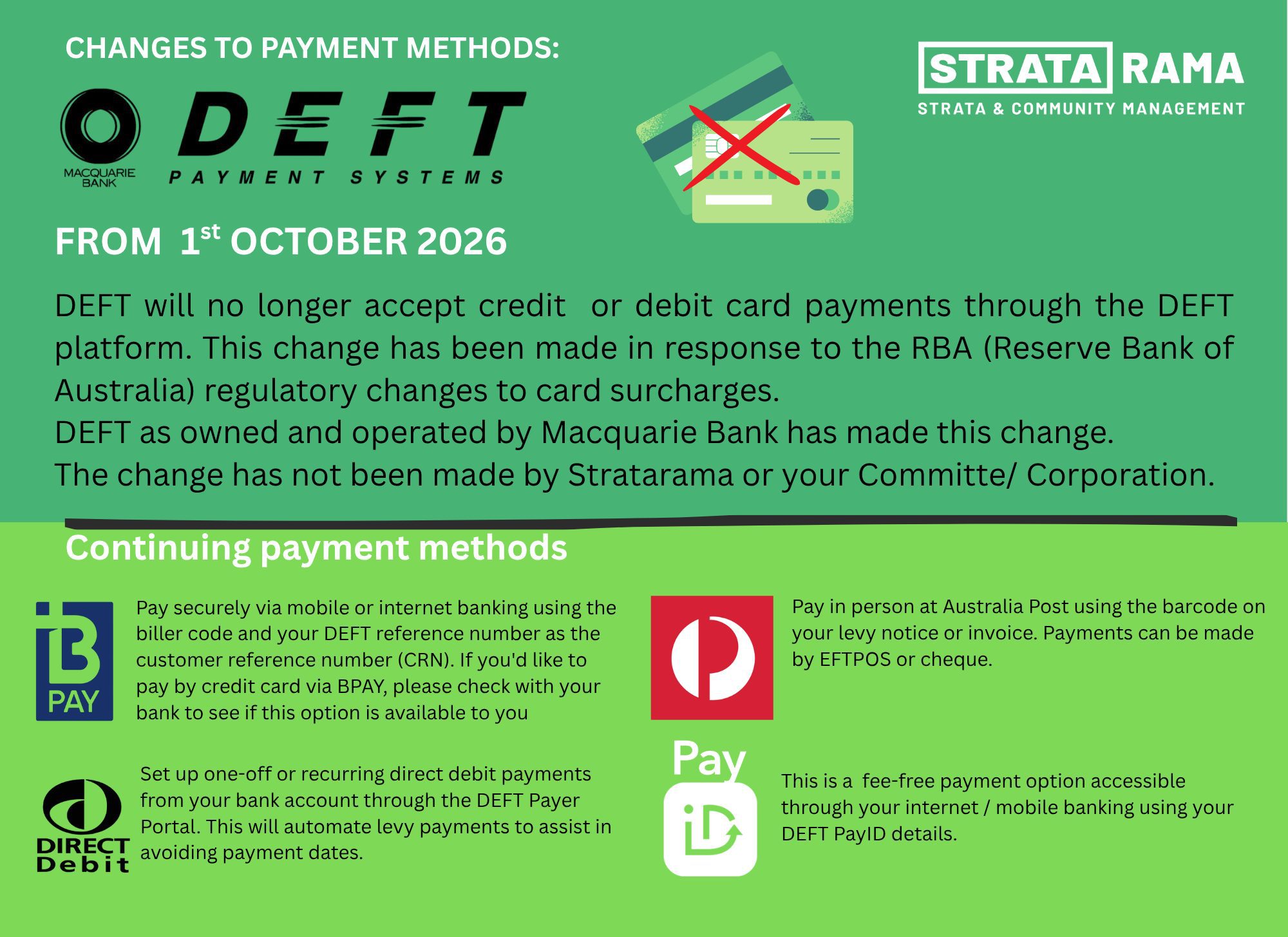
As a result, payment providers, including DEFT (as owned & operated by Macquarie Bank) are now phasing out credit card payments for Corporation levies.
Please note this is not a decision made by Stratarama or your Committee, but a regulatory change by the RBA and subsequent changes by the Banks.
You will find many Strata managers across Australia sharing the same update because this change has been made by an Industry payment provider.
Changes to Payment Systems
What This Means for You
If you currently pay your Strata/ Community levies by credit card, you will be affected.
From 1 October 2026, credit card payments will no longer be available through the DEFT system. If you use a credit card today, you’ll need to switch to another payment method before this date to ensure your levy payments continue without interruption.
- If you don’t pay by credit card: Nothing changes. You don’t need to do anything.
- If you do pay by credit card: You’ll need to choose a different payment method and update your payment details before 1 October 2026.
Switch now. If your levies fall due on or after October 1st and your payment method hasn’t been updated, your payment won’t go through. Overdue levies may attract interest or recovery action under body corporate legislation, which we want to avoid.
Available Payment Options
You can continue using any of the following through DEFT:
- BPAY
- Direct Debit – *Must be linked to a Bank account, not a credit/debit card
- PayID – * You can obtain the PayID associated with your DEFT reference number through deft.com.au.
- Post Billpay
Your levy notice includes all payment options and the reference numbers you’ll need.
How to update your payment method
You can manage your preferences for payments and set up alternative payment methods through the DEFT Payer Portal at www.deft.com.au.
What Is Stratarama Doing?
Stratarama continues to use the current DEFT payment system and will continue to update owners when changes are made.
Your DEFT payment platform remains accessible for members payments.
Please note that Stratarama does NOT receive any card surcharge fees or payment processing fees from DEFT.
Need Help?
If you’re unsure which payment option is best for you or need a copy of your levy notice, contact our team at accounts@stratarama.com.au.
To learn more about the regulatory changes visit the Reserve Bank announcement here: https://www.rba.gov.au/payments-and-infrastructure/review-of-retail-payments-regulation/2026-03/
Need more information on DEFT?
For more information about these changes and available payment methods, visit www.deft.com.au/change.
Alternative payment options to card payments through DEFT –
- Direct debit via DEFT
Set up one-off or recurring direct debit payments from your bank account through the DEFT Payer Portal. This will automate levy payments to assist in avoiding payment dates.
- PayID
This is a fee-free payment option accessible through your internet / mobile banking using your DEFT PayID details.
- BPAY®
Pay securely via mobile or internet banking using the biller code and your DEFT reference number as the customer reference number (CRN). If you’d like to pay by credit card via BPAY, please check with your bank to see if this option is available to you and whether any fees or charges apply. ® Registered to BPAY Pty Ltd ABN 69 079 137 518.
- Australia Post
Pay in person at Australia Post using the barcode on your levy notice or invoice. Payments can be made by EFTPOS or cheque.