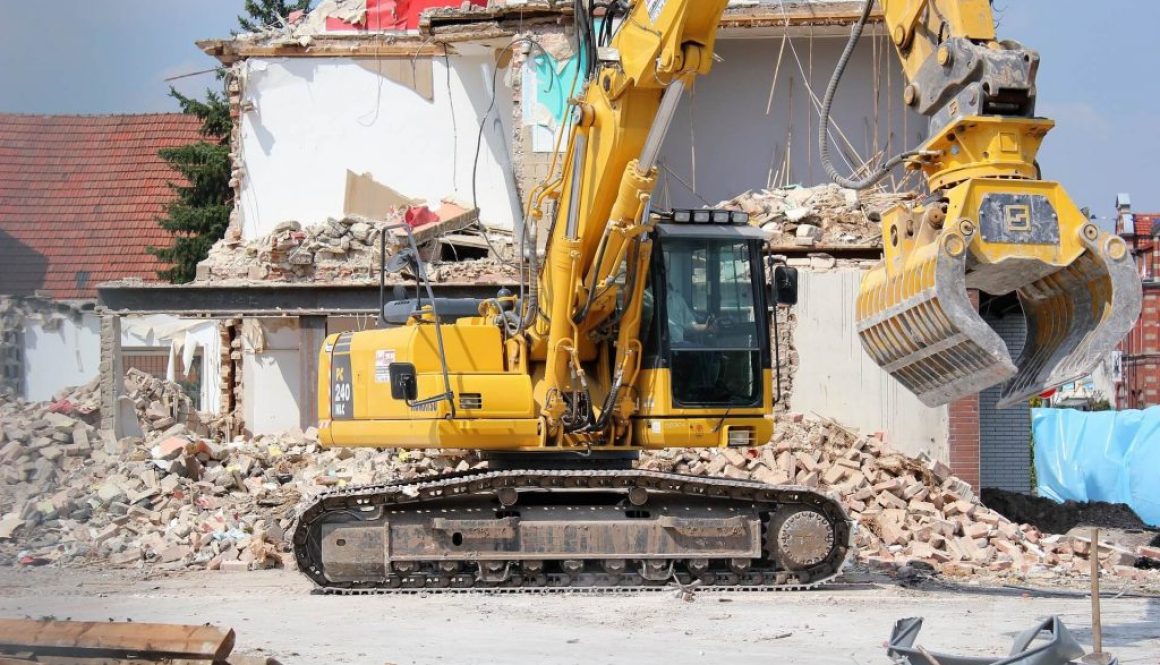
Have you ever heard of Removal of Debris cover?
Removal of Debris or ROD is the cost of removing and disposing of property (damaged or undamaged) to enable a building to be rebuilt after an insurable loss.
Stratarama web site post category for strata. Use this category to filter all posts and Video Explainers on the category strata. Strata Archives
Removal of Debris or ROD is the cost of removing and disposing of property (damaged or undamaged) to enable a building to be rebuilt after an insurable loss.
I’ve been approached recently by some strata unit owners who have become stressed with their current situation and their current management arrangements. They felt that the process to change management was difficult and stressful, and that rather than do something, perhaps it was too hard, and that now especially during corona, it was harder than ever to make a shift. They didn’t want to be locked into another year though with existing management.
A few years ago at one of the fantastic National Conference events organised by the SCA (Strata Community Association) National Conference in the Hunter Valley. I was treated to many amazing Speakers presenting some fantastic learning material and personal stories. Not to mention the brilliant take aways!
Whether winning business, or keeping business – There is always one KEY component to being successful: Communication.
There are several Body Corporate Titles (& respective Acts) in South Australia. Most common of course is the Strata Title and it’s replacement – Community Title.
In my mind, the name change from Strata to Community Title should indeed emphasis to all, that all Body Corporate Title’s are truly about; COMMUNITY LIVING.
Your purchase into a Body Corporate isn’t just about buying an apartment, townhouse, a Home or Investment – you are buying into a Community. You are taking an additional responsibility to be part of that Community, to respect the Community Residents and Owners, and their rules and facilities. A responsibility towards others, to ensure that everyone has the enjoyment of their own private Lot and also enjoyment of the communal property. This additional responsibility is yours to understand and learn.
Part of the Community responsibility means that you agree to protect the site and one another through adequate levels of Insurance. You will also need to establish funding levels which ensure the maintenance and condition of the site are sufficient and safe. To consider the best interests of all parties involved. These responsibilities are taken jointly and severally.
Legislative requirements are placed on you as a Community Owner but common sense and neighbourly consideration are needed hand in hand, to ensure your Community thrives. Community Living will not suit everyone, but it does offer amazing living (and investment) solutions for many Australians.
If you are considering purchasing a Community property, I urge you to take the time to learn not just about your building purchase, but about your rights and responsibilities of owning with-in this specific community group. Seek out the Strata Manager or Presiding officer, review Bylaws, financials, ask any questions – then bring the right attitude towards being a part of a Community
I need to preface this Article by stating that my comments below are not advice to you directly. These are my General thoughts having been in this Industry over an extended period of time. Your Property Insurance should be considered directly by yourself, based on your individual Body Corporate needs, and referencing the Individual policy, Product disclosure statement and Financial Services guides provided by your Insurers.
I have dealt with numerous Insurers over the years, some Good and some less so (in my opinion). My dealings with these Policies have ranged from Companies which I have many years of successful dealing and other Companies who are not really suited to be Body Corporate Insurers. By this, I simply mean that Body Corporate Insurance is not their niche. Let’s be honest, Body Corporate is a niche Industry with specific needs which differ greatly to the Standard House Insurance Policy. Numerous Household name Insurance Companies simply don’t offer a Policy to address your body corporate needs and in some instances do not meet your legal obligations in regards to the group’s Insurance.
Please note that I am not here to spruik any specific Insurer, as Managers, this is not what we do. Our responsibility is to remind our Members of their Insurance needs & obligations. As such, I urge Owners to read their Policies, especially when comparing Insurance offers. Please ensure that the Policy you are considering meets your needs and provides the best possible outcome for all the Members of the group. No Policy comparison will be “apples for apples” an exact match for another in terms of coverage. But that’s ok, provided as a group, you are not simply reading the dreaded bottom line – the premium. Some other considerations should be What is the excess? What additional covers are in place? In the event of a claim, what will or will not be covered (remember that each Policy may have different exclusions on their cover – how do these affect your possible claims)? Are we meeting our legal obligations in this State? Are we near a Flood prone area? Can we take out cover for this? I acknowledge the Premium is important to all Owners, but it is only one factor when considering a Policy. Read your PDS & FSG, go through the Policy details, and if you are still not sure then ASK
* Ask Your Strata Manager if the group is meeting their Obligations to have certain covers in place (not levels of cover).
* Ask your Manager for a copy of the Strata or Community Titles Handbook in S.A, – gather your own information about the Covers required.
* Contact the Insurer directly and seek advice on their policy details.
I would like to point out that each Act is different and you may be responsible to Insure only Common Property or to Insure the whole Building. In either event, it is your responsibility to make sure each building is insured to protect every Unit Owner in the event of a total loss. It may never happen (and I hope it never does), but you are protecting everyone in your group from the risk. Don’t place yourselves in a situation where you are under Insured.
When placing cover, consider – When was the last time our group had an Insurance review? the last time we increased cover? When did we last have a Insurance Valuer advise us (note this is not a Selling Agents appraisal)? Has Building costs increased since our last review? For many groups, this is the largest recurrent expenditure that the group will fund Annually – so please give it the attention it deserves, review it, discuss it and protect yourself and one another.
Whilst there are imposed restrictions on face to face gatherings due to the Coronavirus pandemic, we have had to restructure the way we undertake meetings with our Clients for the foreseeable future. The long term positive from these necessary adjustments, are that Stratarama will be well positioned at the end of this pandemic to offer our Clients more options for their Strata and Community Titled meetings.
YOUR VOTE COUNTS
Attendance at your AGM (annual general meeting) or other meetings, is not mandatory. However, the benefits in having your voice heard or even just listening to what is being discussed for your group could be huge!
Whether you are an Owner occupier or leasing the property, this remains one of the largest financial investments you can make. Remember that as an Owner you have a right to be heard and have a vote – Make the most of it.
In many instances, these Annual meetings may be your only opportunity to discuss the business of the group with all the other Members present. The votes undertaken at these meetings could determine many things such as the level of funds you contribute each quarter, the priority of maintenance for the building (& quotes for same), special levies, insurance covers, your management and of course any possible aesthetic changes to the site.
As a Strata Manager, I completely understand that not everyone has the time to attend a meeting or may have other reasons for not attending (disagreements with other Members, desire to avoid confrontation, medical matters, personal issues, etc). It is fair to say that when you receive your Agenda, if a major issue is not listed for discussion, perhaps you’re just happy to go with the flow. This is completely fine.
If you can’t attend a meeting, your vote can still be counted by returning a proxy form and nominating someone to vote on your behalf. This is important because even if you have no input you wish to provide, a quorum still needs to be formed and your vote may be the difference between another Owner getting an approval for their pet, solar panels or other works – and having to have the meeting all over again.
If you are unsure of something, seek out your Manager for advice prior to the meeting. If you are part of a self managed group, please take the time to know what is going on and that you are meeting your obligations.
If you do have something you would like to request or talk about at the AGM, ask your Manager or Presiding Officer to ensure that this is placed on the Agenda for the meeting. This will ensure that you don’t miss your opportunity.
Some matters may seem trivial, but knowing the position of others will hold you in good stead. Not every decision will be big, but as I always say – knowledge and communication are key. Your group does have a legal requirement to have these meetings and ensure certain matters are reviewed, so no matter your position and whether you attend or supply a proxy – don’t miss your opportunity to be heard or for your vote to count.
A SOMEWHAT HUMOROUS REFLECTION OF MY TIME IN THE STRATA MANAGEMENT INDUSTRY.
I wrote the below article last year as a tongue in cheek piece on my experiences. This went on to win the Essay of the Year award from the SCA (Strata Community Association) South Australia and became a Finalist for the 2018 National Award. I trust those reading will take it in the manner in which it was intended.
As a Strata Manager for over 15 years, you could assume that those closest to me have an excellent understanding of strata and the industry. If you ask my mother, I am a “Property Manager”. If you asked my grandparents, my job was “real estate” and they were often keen for me to tell them the value of their house. Some of my “tradie” mates regularly remind me how stress-free my job is because I sit on my butt all day, taking the odd phone call or writing the occasional email.
For those seemingly more in the know, a Strata Manager’s role involves looking after one group of units and making sure that whatever they want done, gets done from an open-ended cheque book. Similar to a form of insurance where members never need to put money in an account because “the strata will pay for it”.
Those that live and breathe strata know better.
Strata is a form of title for property ownership, which allows an individual to own part of a collective property (unit, townhouse, commercial unit) with shared ownership in common space (garden, pool, foyer). No matter what form (legislatively) or name that strata goes by, it is a mini-democracy of people needing to come together for common governance. Just as our Australian political system is ever calm and without disagreement, so too are our mini democracies. These politicians are invested in the economy of the country and maintenance of our infrastructure, and so too should be the committee of your strata complex (only more so).
Our role as a Strata Manager entails guidance around the Act and steering groups towards those most qualified to assist with their particular project or maintenance item. We arrange insurance claims, undertake forecast budgeting, co-ordinate meetings, direct groups towards their obligations under various strata, community or body corporate legislation, paving the way for them to succeed.
Many of us will find that the expectations of a strata manager are even greater. Suddenly, that career choice, which no one knows anything about, comes with the expectation of having qualifications in law, property management, accounting, counselling, project management, engineering and more.
Recently I was even asked if I could assist with an owner’s last Will and Testament.
In recent years, owners have enquired when I would be attending their property to clear a blocked drain, draw up their commercial lease, perform a check on top of their two-storey roof and break into a fuse box. Obviously, I am not qualified in these fields (or often legally able to assist), but neither are the unit owners qualified. As the person they pay to get the job done, it is important that we provide guidance so they can be directed to the appropriate information/ person so that they are well informed to fix or progress their concerns (provided it is actually relevant to the property).
A strata is a community made up of different ages (retirees, first home owners, Baby Boomers), nationalities, religions, backgrounds, views, personalities and experiences. In any community, the people who form it must look out for one another, protect each other and their collective investments. Protecting an investment requires caring for it, preventing deterioration with regular maintenance and insuring it against fire, theft, storm and other damage. With these different views and personalities, protecting one another can be difficult. Our aim as a community at any level is to ensure that its members are safe, happy and unencumbered by unnecessary angst caused by excessive noise, health and safety issues, and the three biggest complaints that all strata managers know too well – the three Ps – pets, parking and people.
Just as the occasional politician may struggle to agree on every piece of legislation, so too will these strata members disagree, and often it is through negotiation, cooperation and common sense that sees the group form a resolution (or at least a majority decision).
Strata living isn’t always going to be equally fair to every member, depending on their individual needs or preferences and so at minimum, those looking to buy in a complex should review the decisions made by that group to see if they are going to be a suitable addition to that community. For example, if I am an AFL footballer looking to move to a club for a premiership, I’d probably consider that the Gold Coast is not my best destination choice.
You may be reading this essay, thinking that as a Strata Manager I am not overly impressed with “strata”. You couldn’t be more wrong. I am passionate about each little or big community and ensuring that everyone is looked after. To build knowledge for those unfamiliar with the concept of strata and educate them, not just because they may share a common roof, but because they have rights and obligations that need to be met if they are to be part of that community, the same as if you decided to join any organisation. Putting together the bricks and mortar for a complex (or deadly unsafe cladding that requires urgent replacement) is only the first step towards building a community. Members share a common space and I love seeing a community build to ensure that tenants, owner occupiers, investors and more are looked after and have the opportunity to thrive in a safe environment. Let those varying views, personalities, skills and backgrounds be utilised for the better good of the complex and the community.
If all else fails, just change Prime Ministers right?
When it comes to the health and safety of people, we understand that prevention and risk minimisation is of utmost importance. The current Coronavirus (COVID-19) situation has been developing quickly and in various ways has impacted upon the daily life of everyone.